





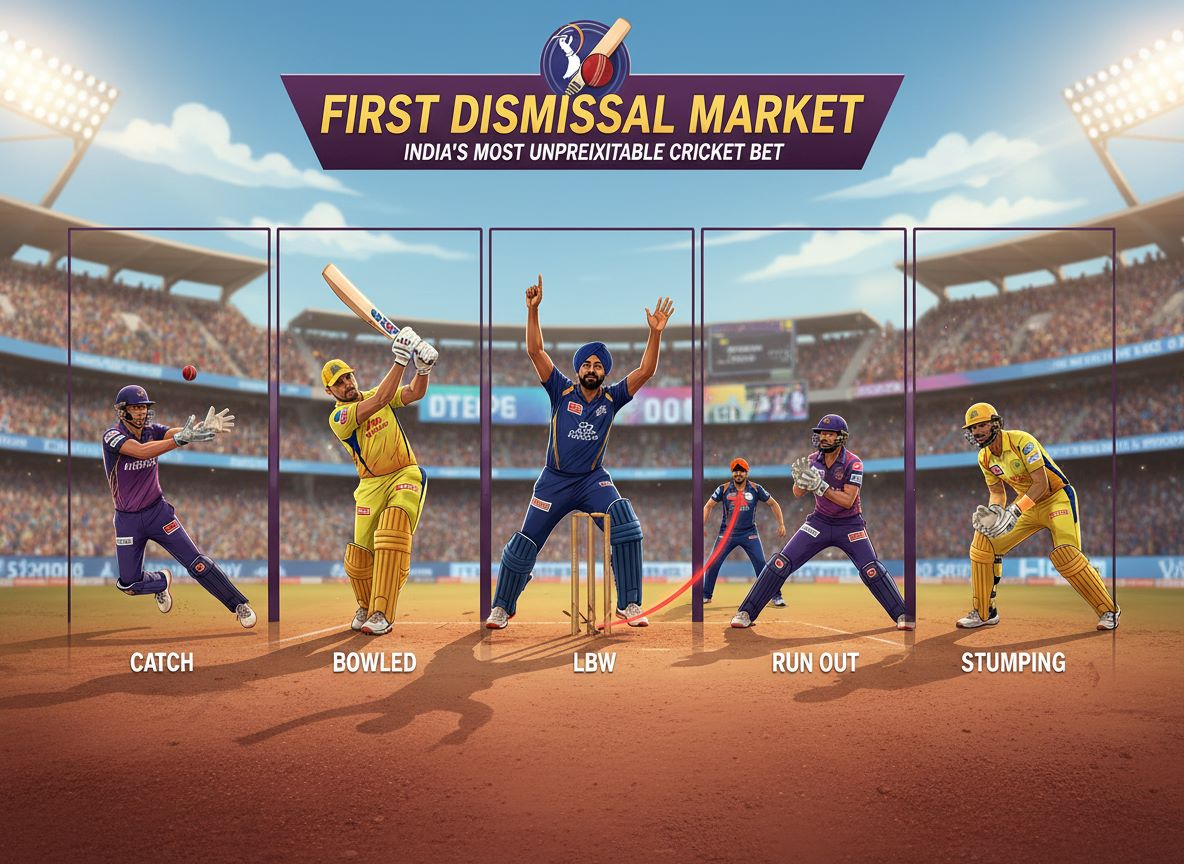
The method of first dismissal market represents one of cricket’s most dynamic and unpredictable betting opportunities, particularly when wagering on Indian matches. This prop bet asks you to predict exactly how the first wicket will fall – whether through a catch, bowled delivery, LBW decision, run out, or stumping. Unlike straightforward match winner or total runs markets, first dismissal betting demands deep understanding of playing conditions, batting styles, and bowling attacks specific to Indian cricket.
Expect significant volatility in this market, as a single delivery can dramatically shift odds and outcomes. Indian match conditions – from spinning pitches in Chennai to swing-friendly surfaces in Delhi during winter months – create unique dismissal patterns that savvy bettors can exploit. The key lies in recognizing how toss decisions, weather conditions, and format-specific strategies influence the probability of each dismissal type occurring first.
How the first dismissal market works in cricket
First dismissal markets center on predicting the specific method by which the opening wicket falls in an innings or match. Bookmakers typically offer this as “first wicket method” or “method of next dismissal” depending on timing and context. The market settles based on official scorecard records, making it one of the more straightforward prop bets in terms of result determination.
Understanding the distinction between similar markets prevents costly mistakes. The “first dismissal” market specifically targets the very first wicket to fall in an innings, while “method of next dismissal” applies to whatever wicket falls next from the current match state. Settlement logic follows ICC scorebook standards, with bookmakers using official match records to determine winning selections.
Most operators offer five core dismissal types: caught, bowled, LBW, run out, and stumped. Some bookmakers include additional options like hit wicket or handled ball, though these rare dismissals typically carry prohibitive odds. The market’s appeal lies in its combination of statistical analysis and real-time match reading, rewarding bettors who can assess evolving conditions accurately.
First dismissal vs next dismissal markets
| Market | When it settles | Typical use |
|---|---|---|
| First dismissal | When first wicket of innings falls | Pre-match betting on opening conditions |
| Next wicket method | When next wicket falls from current state | Live betting during active play |
| First wicket of match | Very first dismissal across all innings | Long-term pre-match strategy |
| Method in powerplay | First wicket during powerplay overs only | Format-specific tactical betting |
| Session dismissal method | First wicket in specific session (Test cricket) | Session-based analysis in longer formats |
How bookmakers settle first dismissal bets
Bookmaker settlement follows official match records maintained by ground scorers and ratified by match officials. The dismissal method recorded in the official scorecard determines the winning selection, regardless of any initial confusion or disputed calls during live play. This scorecard-based approach ensures consistency across different betting operators and eliminates ambiguity about unusual dismissals.
Void scenarios typically occur when no wicket falls within the specified timeframe or innings, such as team declarations, weather abandonment, or target chasing completion without further dismissals. Some bookmakers void bets if the specified batsman doesn’t face a delivery, while others settle based on whoever actually gets dismissed first. Reading specific terms and conditions prevents unexpected outcomes from affecting your betting strategy.
Dead heat rules rarely apply to dismissal method markets since each wicket has a single, definitive cause. However, simultaneous dismissals like run outs involving both batsmen create special settlement scenarios that bookmaker rules address individually. Understanding these edge cases helps evaluate the true probability and risk of your selections.
Common dismissal types and what they mean
| Dismissal type | How it happens | Typical frequency | Betting angle |
|---|---|---|---|
| Caught | Ball caught before hitting ground after bat contact | 55-65% of all dismissals | Shortest odds, safest selection |
| Bowled | Ball hits stumps directly or via batsman | 20-25% of dismissals | Good value on spinning tracks |
| LBW | Ball would hit stumps but strikes pad first | 15-20% of dismissals | Higher probability with DRS |
| Run out | Stumps broken while batsman out of crease | 5-8% of dismissals | More likely in T20s and pressure situations |
| Stumped | Keeper breaks stumps with batsman out of crease | 2-4% of dismissals | Specialist spinner conditions only |
These five primary dismissal types form the backbone of most first wicket method markets. Caught dismissals dominate cricket statistics across all formats, making them the safest but lowest-value betting option. The high frequency occurs because most batting shots involve aerial contact, creating numerous catching opportunities for fielders positioned strategically around the ground.
Bowled and LBW dismissals cluster together as bowler-dominant outcomes, typically comprising 35-45% of total wickets combined. These methods become more attractive on pitches offering movement, spin, or variable bounce. Run outs and stumpings represent the specialist categories, usually offering the highest odds but requiring specific match situations to become viable betting propositions.
Understanding dismissal frequency helps calibrate expectations and identify situations where bookmaker odds might not accurately reflect true probability. Indian conditions often skew these percentages significantly, particularly regarding spin-induced bowled dismissals and stumping opportunities when quality keepers face turning tracks.
Why some dismissal types are priced shorter than others
Bookmakers price dismissal types based on historical frequency data, adjusted for specific match conditions and playing styles. Caught dismissals consistently offer the shortest odds because they occur most frequently across all cricket formats and conditions. Even on bowler-friendly surfaces, edge-to-slip catches and miscued aerial shots maintain caught as the most probable outcome for the first wicket.
Bowled and LBW odds fluctuate more dramatically based on pitch reports, bowling attacks, and weather conditions. A seaming track in overcast conditions might see bowled odds shorten significantly, while a turner favoring spin bowling could make LBW more attractive due to batsmen playing across the line. These condition-dependent variations create the primary opportunities for finding value in dismissal method markets.
Run out and stumped selections typically carry odds of 8/1 or higher because they depend on specific match situations beyond normal bowling and batting exchanges. Stumpings require both a spinning track and an aggressive batsman attempting to dominate, while run outs need miscommunication or direct hit opportunities. These factors make such dismissals attractive for small-stake, high-reward betting approaches rather than primary selections.
Indian cricket conditions that influence the market
- Spinning tracks in Chennai, Pune, and Delhi dramatically increase bowled and LBW probabilities while creating stumping opportunities
- Seaming conditions in Dharamshala and Bangalore favor caught dismissals through edges and false shots to slip cordon
- High-altitude venues like Dharamshala create unique ball movement patterns affecting dismissal types early in innings
- Monsoon and winter weather influence swing bowling effectiveness and fielding conditions for catches and run outs
- Day-night Test matches with pink balls create enhanced movement during twilight periods
- IPL home ground advantages where teams optimize bowling attacks for specific dismissal types on familiar surfaces
- Powerplay field restrictions in limited overs cricket concentrating fielders in catching positions
Pitch, weather, and toss impact
Toss decisions in Indian conditions often telegraph the likely dismissal patterns for the opening session. Teams choosing to bowl first in overcast conditions typically expect seam movement that produces edge-to-slip catches, while electing to bat suggests conditions favoring stroke play where mistimed shots become catching opportunities. Morning sessions in Delhi or Bangalore frequently offer swing bowling conditions that shift odds toward caught dismissals.
Dew factor in evening matches significantly affects dismissal probabilities, making spinners less effective and reducing stumping chances while increasing run out opportunities due to slippery ball handling. Weather tracking becomes crucial for live betting, as sudden cloud cover can transform batting conditions and swing the first dismissal odds dramatically within a few overs.
Pitch deterioration across Test matches creates evolving dismissal patterns, with Day 1 favoring caught dismissals before spin takes over on Days 4-5, increasing bowled and LBW probabilities. Understanding these progression patterns helps identify value bets when bookmakers haven’t fully adjusted odds for changing surface conditions.
Format-specific dismissal tendencies
| Format | Common early dismissal types | Why |
|---|---|---|
| Test cricket | Caught (65%), Bowled (20%), LBW (15%) | Cautious batting, longer spells from bowlers |
| ODI cricket | Caught (60%), Run out (10%), Bowled (20%) | Powerplay aggression, quick singles pressure |
| T20 cricket | Caught (55%), Run out (15%), Bowled (18%) | Immediate attacking intent, risky running |
| IPL specific | Caught (50%), Run out (20%), Bowled (18%) | Ultra-aggressive batting, powerplay maximization |
Reading odds and identifying value
| Outcome | Implied chance | Market signal | Notes |
|---|---|---|---|
| Caught at 1.80 | 55.6% | Standard pricing for neutral conditions | Safe bet but limited value |
| Bowled at 4.50 | 22.2% | Expecting seam or swing movement | Good value on turner tracks |
| LBW at 5.00 | 20.0% | DRS expected to impact decisions | Consider umpiring tendencies |
| Run out at 8.00 | 12.5% | Anticipating pressure or poor running | T20 powerplay opportunities |
| Stumped at 12.00 | 8.3% | Specialist spinner + attacking batsman | Rare but high-reward selection |
| Caught at 2.20 | 45.5% | Market expects bowling-friendly conditions | Premium pricing suggests value elsewhere |
When odds are attractive versus misleading
Attractive odds typically emerge when bookmakers haven’t fully adjusted for specific Indian conditions or recent team changes. For example, if Ravichandran Ashwin replaces an injured fast bowler on a turning track, stumped and bowled odds might not reflect the dramatically increased probability of spin-induced dismissals. Smart bettors monitor team announcements and pitch reports for these adjustment lags in the betting markets.
Misleading odds often result from overreaction to small sample sizes or recent high-profile dismissals. A spectacular stumping in the previous match might artificially depress stumped odds for the next game, despite fundamentally different conditions. Bookmakers sometimes overweight dramatic recent events rather than underlying statistical probability, creating value opportunities in the opposite direction.
The key lies in separating genuine shifts in dismissal probability from market noise. Weather changes, pitch preparation differences, or bowling attack modifications create legitimate reasons for odds movements, while media hype or previous match outcomes without contextual relevance often produce misleading price signals that disciplined analysis can exploit.
Team and player factors to assess before betting
- Analyze the opening batting pair’s technique and recent form – aggressive players increase run out chances, while technique-focused batsmen favor caught dismissals
- Evaluate the new ball bowling attack’s strengths – swing specialists create slip catch opportunities, while express pace bowlers generate more bowled dismissals
- Review head-to-head matchups between key bowlers and batsmen – historical dismissal patterns often repeat under similar conditions
- Consider recent tour adaptations for visiting teams – international sides often struggle initially with Indian conditions, affecting dismissal patterns
- Assess wicketkeeper quality for stumping opportunities – elite keepers like MS Dhoni or Rishabh Pant significantly increase stumping probability against spin
- Monitor team selection announcements for bowling balance changes – extra spinner inclusion dramatically shifts dismissal type probabilities
- Factor in captaincy styles and field placement tendencies – aggressive captains create more catching opportunities through attacking field positions
Key batting and bowling indicators
Opening batsmen’s strike rates during powerplay overs provide crucial insights into likely dismissal types. Aggressive stroke players attempting early boundaries increase caught dismissal probability through mistimed shots, while defensive openers facing quality bowling create more opportunities for bowled or LBW outcomes. Analyzing recent innings footage helps identify specific weaknesses that opposing bowlers might exploit.
Bowling attack composition tells the dismissal type story before a ball is bowled. Teams fielding three pace bowlers and one spinner suggest higher caught dismissal chances, while balanced attacks with two quality spinners increase stumping and bowled probabilities. New ball partnerships matter enormously – complementary bowling styles create different dismissal opportunities than similar-paced attacks.
Match-up analysis between specific bowlers and batsmen reveals historical dismissal patterns worth tracking. Some batsmen consistently fall to particular bowling types in predictable ways, while certain bowlers specialize in specific dismissal methods. Database research on these individual relationships often uncovers value not reflected in general market odds.
Simple pre-match checklist
- Check latest pitch report and weather forecast for movement and spin potential
- Confirm team compositions and any late bowling changes affecting dismissal probabilities
- Review opening batsmen’s recent dismissal history in similar conditions
- Assess toss impact on bowling conditions for the first session
- Compare odds across multiple bookmakers for the best available prices
- Verify specific market rules and settlement terms to avoid surprises
Live betting approach for first dismissal markets
Live betting on first dismissal markets requires rapid analysis of evolving match conditions and in-play odds movements. Unlike pre-match betting, live wagering allows you to observe actual pitch behavior, bowling rhythm, and batsman comfort levels before committing to a position. The key advantage lies in reading real-time signals that static pre-match analysis cannot capture.
Field placement changes provide immediate clues about likely dismissal types. Captains bringing in close catching fielders signal expectation of edges or mishits, while spreading the field suggests run-scoring pressure that might create run out opportunities. Watch for slip fielder adjustments, short leg introductions, or wicketkeeper positioning changes that telegraph the bowling strategy and expected dismissal method.
Batting tempo and bowler rhythm create live betting opportunities as odds adjust to current play. Batsmen looking uncomfortable against particular bowling types see their associated dismissal odds shift accordingly. Similarly, bowlers finding good line and length quickly move caught dismissal odds as edge-probability increases with each testing delivery.
Early over analysis reveals crucial information unavailable pre-match. The actual amount of swing, seam movement, or spin helps calibrate true dismissal probabilities against bookmaker assumptions. Quick identification of favorable batting or bowling conditions allows strategic live bet placement before odds fully adjust to new information.
Best moments to wait, watch, or enter
| Match moment | Signal | Possible dismissal angle |
|---|---|---|
| New batsman arrives | Nervous energy, unfamiliar conditions | Bowled or caught – fresh concentration required |
| Bowling change imminent | Captain frustrated, trying different approach | Stumped if spinner introduced, LBW if angle change |
| Pressure building | Dot balls accumulating, batsmen consulting | Run out through risky single attempts |
| Weather change | Cloud cover or light deterioration | Caught via swing or seam movement |
| Aggressive field set | Multiple slip fielders, short covers | Caught becomes heavily favored |
Common mistakes and risk control
- Overbetting on high-variance outcomes like stumpings or rare dismissal types without proper bankroll management
- Ignoring specific venue conditions and betting based on general statistics rather than location-specific factors
- Misreading bookmaker settlement rules leading to unexpected losing bets on technically correct predictions
- Chasing losses with increasingly exotic selections rather than sticking to disciplined value-based approach
- Failing to account for DRS impact on LBW dismissal rates in modern cricket
- Overweighting recent dramatic dismissals instead of underlying statistical probability patterns
- Betting without confirming team compositions and late bowling attack changes that shift dismissal probabilities
Mistakes that reduce expected value
Loss-chasing represents the most common mistake in first dismissal betting, particularly after a narrow miss on a well-reasoned selection. The volatile nature of this market creates frequent near-misses that tempt bettors into immediate re-entry with larger stakes or more exotic selections. Disciplined bettors recognize that each bet exists independently and avoid emotional decision-making after unfavorable outcomes.
Over-dependence on single statistical measures like recent team dismissal breakdowns ignores the contextual factors that make each match unique. A team’s historical caught dismissal rate means little if they’re facing completely different bowling conditions or opposition attacks. Successful betting requires multi-factor analysis that weighs various inputs rather than relying on isolated data points.
Market volatility in first dismissal betting often creates false urgency that leads to poor timing and inadequate research. Unlike match winner markets that develop over hours or days, dismissal method odds can swing dramatically within minutes based on early match action. Patient bettors who wait for proper value rather than rushing into perceived opportunities typically achieve better long-term results.
Bankroll rules for prop-style cricket betting
- Limit individual first dismissal bets to 1-2% of total bankroll due to high variance outcomes
- Avoid consecutive betting on multiple dismissal markets within same match to prevent correlation risk
- Maintain separate allocation for high-odds selections like stumpings or rare dismissal types
- Track results by dismissal type and venue to identify personal strengths and weaknesses
- Set monthly limits for total prop betting exposure regardless of individual bet performance
Practical summary for betting on first dismissal in India
Successful first dismissal betting in Indian cricket combines statistical foundation with real-time condition assessment and disciplined bankroll management. The unique playing conditions across Indian venues create significant opportunities for bettors who understand how pitch characteristics, weather patterns, and format-specific strategies influence dismissal probabilities. Focus on identifying situations where bookmaker odds haven’t fully adjusted for local factors or recent team changes that shift the underlying probability landscape.
Match state reading trumps player reputation analysis in this market. While star players matter, the immediate conditions of pitch behavior, bowling rhythm, and field placement provide more reliable indicators of likely dismissal types than historical player statistics. Develop skills in rapid live analysis while maintaining patience for genuine value opportunities rather than betting for betting’s sake.
Risk management becomes crucial given the inherent volatility of predicting specific dismissal methods. Small stake sizes, diversified approaches across different dismissal types, and strict adherence to predetermined betting limits help navigate the natural variance while capitalizing on edges when they appear in the market.
What to remember before placing a bet
- Verify current match conditions and team compositions rather than relying on pre-match assumptions
- Compare odds across multiple bookmakers to ensure maximum value for your selection
- Confirm specific settlement rules to avoid disputes over unusual dismissal scenarios
- Assess your confidence level honestly and stake accordingly within bankroll guidelines
- Consider live betting opportunities if pre-match value seems limited